

Resident Information
Rules and Regulations
Your Responsibilities
- Window screens were in good repair when you purchased your unit. Screen damages are yours to repair. We are aware that some screens are difficult to install and periodically the corporation will repair screens as a courtesy, but generally if you damage them, please replace them.
- You are responsible for clearing your front walk and driveway of snow.
- You are responsible for cleaning your windows and keeping them in good repair.
Condominium Responsibilities
- Your condominium corporation is responsible for everything outside your unit. This includes the exterior, attic, roof windows and the patio door.
- Owners may not replace windows or the patio door. If you have a bad window or patio door, please contact the property manager, in writing, of the problem.
- Our landscape maintenance contractor cuts grass regularly in the summer, including in back yards. If you do not wish your back yard cut, please affix a note on the outside of the gate; however, it is up to you to ensure your back yard is reasonably maintained.
City of Barrie crews pick up recycling on Tuesdays. Please have your recycling out by a.m.; the truck usually comes early in the morning. The pickup day may change to Wednesday if the landfill site is closed, due toa holiday Monday. Blue boxes (for container items) and grey boxes (for paper items) may be picked up at the landfill site (or they will deliver), and recycling informationis available from the City of Barrie Environmental Services by calling 739-4219.
Barrie does not pick up organics inside the complex; however, you can put your green bin on Donald Street and city crews will empty it.
A private company picks up garbage on Wednesdays, even if Monday is a holiday. Each unit is allowed two garbage bags or garbage containers (within City of Barrie weight limits). as we do not have organics collection (green bin). The contractor will not pick up any other items such as broken lawn chairs, so please do not put these out on garbage day. You are allowed to dispose of a certain amount of waste per year free of charge by taking it to the landfill site. For further information about recycling, call the landfill site at 739-4220 or at www.barrie.ca/living/garbage; disregard garbage collection as the city does not serve private condominiums.
Download this section as a PDF
Renovations and Major Projects
Our units were built in the late 1970s before the current building codes.
Electrical upgrades to accommodate more appliances are required, especially if you are upgrading your kitchen.
Breaker boxes, in the garage, were installed by the corporation in the late 1990s They are the responsibility of unit owners to maintain.
Original wiring was aluminum as at the time, copper prices soared and aluminum wiring was less expensive but performed well. Major transmission lines are still aluminum. They are lightweight and are excellent conductors. In our units, aluminum wiring continues to perform well if maintained and if the correct plugs and switches are used. Please see the write-up on aluminum wiring if you are going to replace wiring with copper or make minor repairs and have done some wiring before. If you are going to do major wiring work, you MUST hire a licensed electrical contractor and obtain a City of Barrie building permit. Major work incudes a complete kitchen rewiring, complete household rewiring, addition of central air conditioners, hot tubs etc.
This is for your own safety and for that of your adjoining neighbours. If a fire occurs and it is your fault due to poor workmanship, your insurance may not cover remediation costs.
Renovations:
Some owners have opened the kitchen area into the dining/living room area by removing the original short wall separating them. This renovation requires a City of Barrie building permit. The side supporting walls require reinforcing, the upper supports across them must meet a city standard and in the basement, additional supports are usually required. Failure to acquire a permit may result in a legal challenge by the condominium corporation. At the same time and under the same permit, upgrade kitchen wiring for additional outlets and appliances.
Kitchen exhaust fans can only be exhausted through the back of your unit even if you are an end unit. The fan outlet cannot go through the brickwork, it must curve slightly upward and through the vinyl cladding, under which is the original board and batten construction.
If you are doing basement renovations and building in living space, consider an egress window to replace the basement window. (See the write up on them) You may with to consider one anyway, especially if children use the basement for a play or recreation area. Fire spreads quickly and if the stairs are blocked, there is no other exit. A building permit is required.
Water:
Water meters in the house are the responsibility of the unit owner. Most meters are original and some are difficult to turn on and off, simply because of lack of use. If you have a meter issue, call a licensed plumber. Water can be turned off on the lateral line coming into your unit, but a City of Barrie request is required. City crew will turn the water off and later, back on. The cost is payable by the unit owner.
A word, of caution, because these shut-offs are over 40 years old, some just don’t work anymore and can’t be turned off. You plumber can “freeze” your line coming in and change your meter or inside shut-off valve, if required, without the City turning off the lateral valve. Consider this approach first and discuss with your plumber.
Heating:
Most original furnaces were replaced by owners over the last 40 years. If you are upgrading to a new high efficiency furnace the intake and exhaust pipes are to be installed in the back of units, even if you have an end unit. They should be kept away from the gas meter.
Central Air Conditioning:
Central air compressors must be located in the back of units even if yours is an end unit.
Other
See the write-ups on Egress Windows, Hot tubs Aluminum Wiring
Egress Windows
Download this section as a PDF
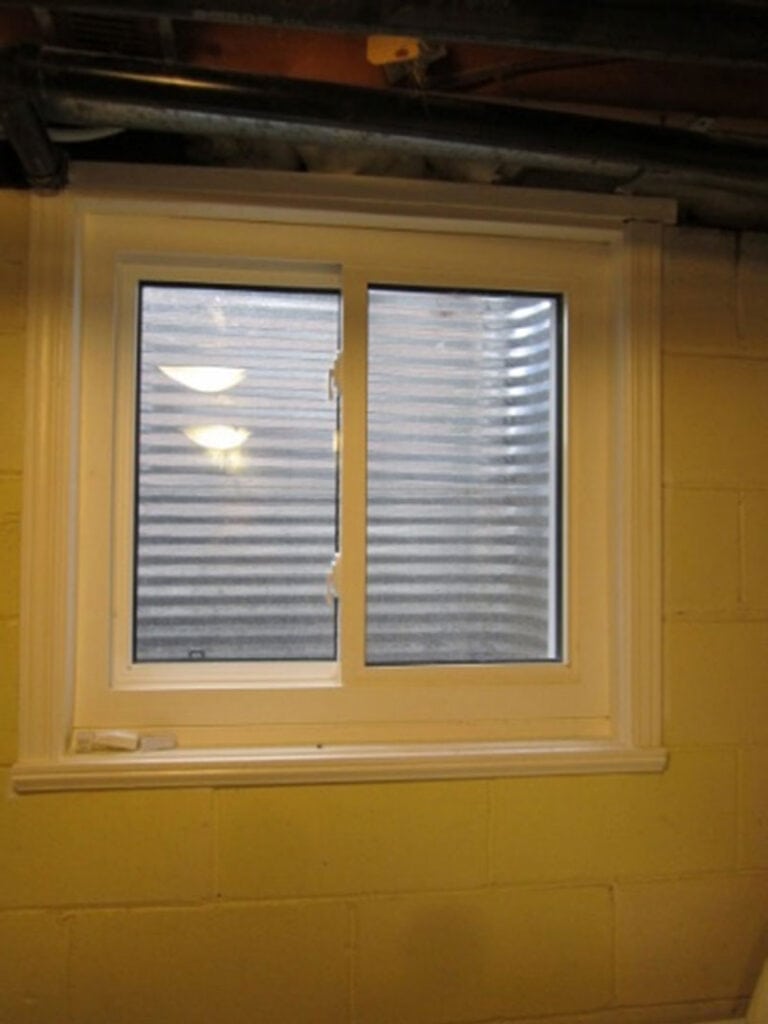
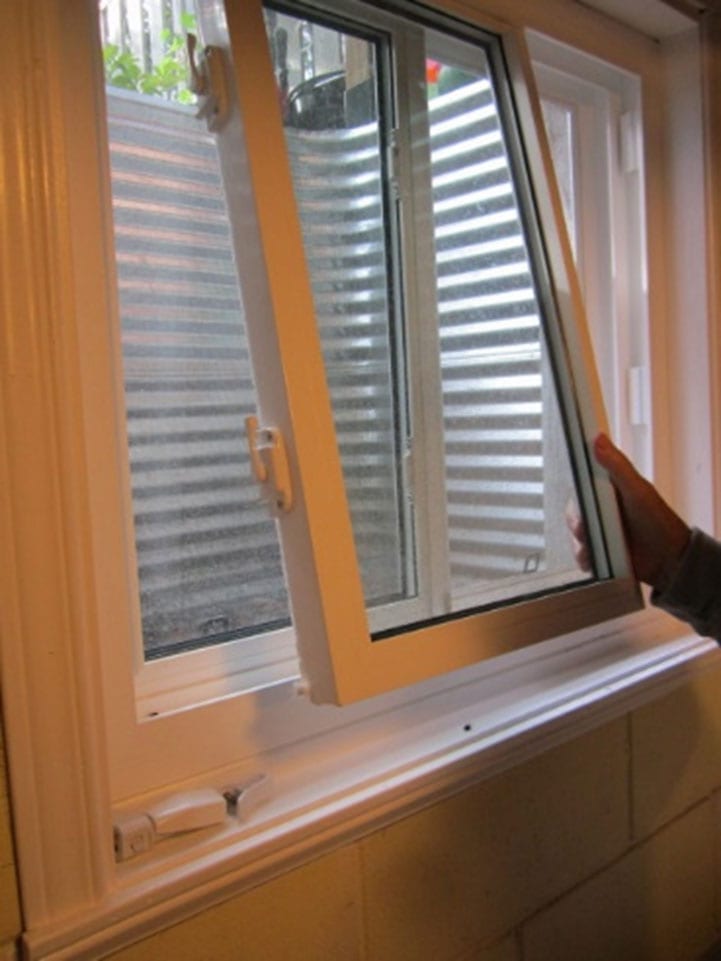
If you are doing basement renovations and building-in living space, consider an egress window to replace the basement window. You may with to consider one anyway, especially if children use the basement for a play or recreation area. Fire spreads quickly and if the stairs are blocked, there is no other exit. Once installed, conduct a fire drill for all inhabitants so they understand how the window operates.
All egress windows must meet the following requirements as agreed by the Condominium Board of Directors in January 2018
- A building permit, required by the City of Barrie, must be obtained
- Window width rough-in size cannot be enlarged. Currently exceeds minimum size requirement. (see Note below)
- Window must be installed by a professional installer, not the unit owner and documentation maintained in the unit file i.e. invoice from installer indicating make of window, when installed and proof that window meets the standard.
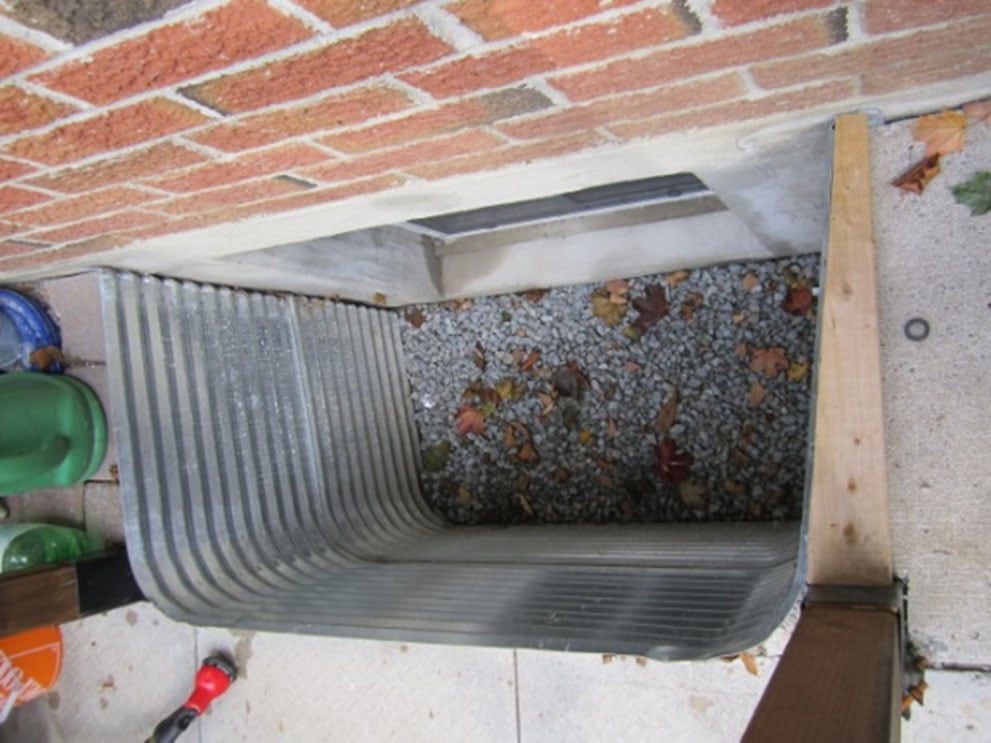
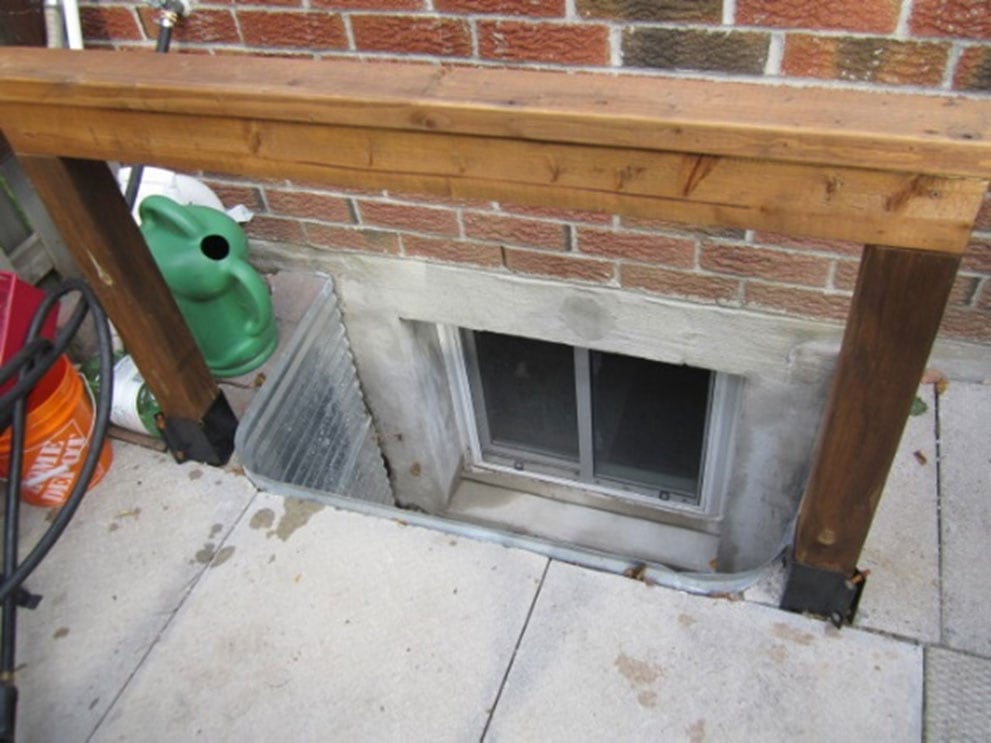
- Window well to be changed, if necessary to meet City of Barrie requirement.
- Final inspection by the City of Barrie and proof that the window can be easily accessed, Written copy to be included in unit file.
- All costs to be borne by the unit owner.
- Owner will complete a Form 98, under the Condominium Act (1998) transferring ownership of the window to the owner.
- Window removed will be removed with minimum damage and returned to the corporation.
Note: Window width cannot be changed, but length can be by removing one series, or more, of blocks. It is recommended that a step stool or step-up to the window be placed so that easier exit to the window from the basement floor is available, important for older people and children.
Aluminum Wiring
Wiring Warning from the Electrical Safety Authority
The following is for informational purposes only. All of this information is collected wisdom. The legal part is that Simcoe Condominium Corporation No 11 is providing this to you for information only and takes no responsibility if you do any wiring alterations, upgrades or repairs in your unit. Our official position is that you should use an experienced licensed electrician for any wiring alterations, upgrades, repairs, or inspections. However, the inside of your unit is your responsibility but because units adjoin each other, should a fire occur because of the work you do, it affects the homes and lives of others. Many unit owners are competent and experienced in home renovations. We provide you with this information to guide you in your renovations.
The main wiring in all the units is aluminum wiring. Aluminum wiring is safe providing it is wired correctly.
The history is that aluminum wiring was used in the 1970s when copper wire prices soared and was used in the building of Parkview Gardens condominiums and millions of other residential homes and buildings in North America. Aluminum is still used for major transmission lines and in industrial applications.
Recently burned out plug receptacles were replaced by homeowners that were found to have seriously burned or melted. Fortunately they caused little damage. Unfortunately one unit experienced a potentially serious fire due to arcing in a receptacle.
Over the years we expect that previous and current homeowners have replaced plug receptacles, light switches and wired new lighting. It’s normal to want to update the look of your unit, but we expect many of the upgrades were made using duplex receptacles, switches and connectors NOT approved for use with aluminum wiring.
So what to do?
If you are not a licensed electrician, we strongly recommend that you use one to do any electrical work within your unit.
If you are concerned about your wiring, it is absolutely worth hiring a qualified licensed electrician to inspect all your wiring. It may cost you a few hundred dollars but it will be worth the peace of mind you will receive.
If you require the name of a reputable licensed electrician please contact the management office.
If your are a home owner who is going to do these jobs regardless of anyone telling you they should only be done by a licensed electrician, then the following information is what we are able to collect on dealing with aluminum wiring.
Information is available on the internet but despite our best efforts no printed information is available from the Canadian Standards Association (CSA) or any provincial electrical organization provide any “official” guidelines or instructions for the homeowner to upgrade home wiring. Information in home renovation manuals is sketchy. A notice (attached) issued by the Electrical Safety Association (Canada) simply states that the terminal devices (receptacle, switches, connectors etc) must be rated for and marked for use with aluminum wire (AL or ALR)
You should also be guided by the “Electrical Code Simplified House Wiring Guide” which is based on the Ontario Electrical Safety Code. The most recent edition is available from the Barrie Public Library or most building supply retailers.
What it all comes down to is this:
Aluminum wiring is safe if wired and connected properly.
The jacket on aluminum two or three conductor wire used in Parkview Gardens units is aluminum coloured. Where you normally use #14 wire with a copper circuit, aluminum uses #12 gauge and so on.
Aluminum wire is brittle, so if you bend it constantly (as in looping it around receptacle screws), it will break.
If you must strip an end on the aluminum wire, do so carefully. If you nick the wire or compress it significantly, you actually reduce the wire gauge!
If you change a switch or outlet in your unit or install a new lighting fixture it is very important that you use only products that are compatible with aluminum wiring. (See the attached ESB notice for marking details)
Aluminum wiring cannot be connected directly to plugs (terminations) that are not rated for aluminum. The average 79-cent plug or switch or the decorative rocker switch that you purchased at the hardware store is probably not approved and could pose a fire hazard in time.
Approved receptacles and switched can be purchased locally and are currently carried by Home Depot. Prices are significantly more than the copper devices; for example a plug used with copper can cost under $1.00 while a similar plug for aluminum is around $5.00.
Is the price worth it? Yes.
Why you ask? Aluminum wire expands at a greater rate than copper or brass when heated, as it does when something is plugged into the outlet. If the receptacle or switch screws are brass, as most of the inexpensive ones are, eventually the screw will loosen with all the expanding and contracting and “arcing” will occur causing heat and sometimes fire, especially if the outlet box has filled with dust over the years. Usually, and hopefully, the receptacle or switch will simply melt; cause a ground fault and trip the breaker.
Aluminum and copper are incompatible metals, so often they “oxidize” and break the circuit. If, for example you have an outlet that doesn’t work, it may have been added during a previous renovation, using copper wire, and the line joined using an incorrect connector and now the metals have oxidized causing the extended circuit to become dead.
What other things should be done?
Inspect all your receptacle and switches
With the power (or at least the circuit) turned off at the main panel, carefully pull out all receptacles and switches and inspect them to see if they are damaged or the screws on the receptacle or switch are brass or metal (silver coloured). If they are secured to aluminum wire they must be metal. If any are brass, the device must be replaced with an ALR receptacle or switch. If all the screws are metal you probably have an original terminal or switch. If it is still in good shape, ensure that the terminal screws are tight – not over tight – but snug and secure. Vacuum out any dust and debris from the enclosure box. Look in the box with a flashlight and make sure the wires are grounded, before replacing the device.
So what about a “copper to aluminum” connection, such as an extension to a circuit, a replacement switch or a light fixture?
What most electricians appear do is make a secure connection with an approved connector and a conductivity paste. The paste is available in a small tube and helps retard oxidation. (Use it sparingly) For example, replacing a switch with a new rocker switch requires that a short piece of #14 copper wire be “pigtailed” to the #12 aluminum wire first by coating the exposed end of the aluminum wire with connectivity paste (Stick it into the tube), then by twisting the two wires together with pliers (to get a very tight connection) then twist on a #63 “Marrette” that has a metal, not copper, coil inside.
When joining an extended circuit to aluminum, the connection must be in a grounded junction box.
The same procedure should be done when installing light fixtures. Twist the wires together using the paste. Often, new lights have small plastic connectors supplied that have no coil inside. In this case they can be used.
If you replace an old aluminum receptacle or switch with a new AL/ALR receptacle or switch, because aluminum wire is brittle, remove the screws entirely from the old device without unbending the coil around the screw. Lightly buff the wire with a wire brush or sandpaper to remove accumulated oxidation and insert the screws from the new device into the coil and then into the device.
Remember that renovations require you to upgrade to current electrical code standards for placement and type of receptacle and switches.
Hot Tubs
Download this section as a PDF
Hot Tubs are permitted in the back yards provided the following is done:
Notify the Board of Directors: Provide a copy of sketch of where the hot tub will be placed. If hot tub is hard wired, must show proof that a licensed electrician has installed it or that outside electrical plug is a ground fault. Must show proof of insurance coverage of hot tub. Must provide a copy of City of Barrie permit and inspection certificate.
Get a permit from the City of Barrie. City Hall, 8th floor, Building Dept.
Fill out application; fee $333.72 (At time of writing March 1, 2018)
(Pool enclosure fee $48.72 + Pool enclosure permit $285) Bring two copies of sketch of where the hot tub will be placed.
Picture of existing fence.
Must be inspected by the City of Barrie Buildings Inspector before you put water in it.
They will check the height of fence; minimum of 4′. Hot Tub has a lockable lid.
If hot tub is hard-wired, must have a licensed electrician install it. If it is a plug in hot tub, must ensure outside plug is ground fault.
Must increase your home owner’s insurance to include coverage of damage to your unit, and other units and common ground, and liability in case of an accident.
Hot tub lid must be locked at all times when not in use. Hot tub must not block gas meters or fence gates.
If owner sells and will take hot tub with them, they must repair any damage to common element ground.
This information is as per City of Barrie March 1st 2018.

Free standing hot tub (not at Kidd’s Creek condos!)